Dead stock stays invisible
A piece that has not moved all season looks exactly like one that arrived last week. Cash sits on the rack, unflagged, until someone happens to notice.
Parakh is the software we built for JMS Studio — a forty-year bridal house that knew its craft by heart and its numbers by memory. It appraises: what sells, what is quietly dead, and what a piece actually earned once the cost is counted.
Try it on this pageA working slice of the app, further down. No sign-up, nothing to install.
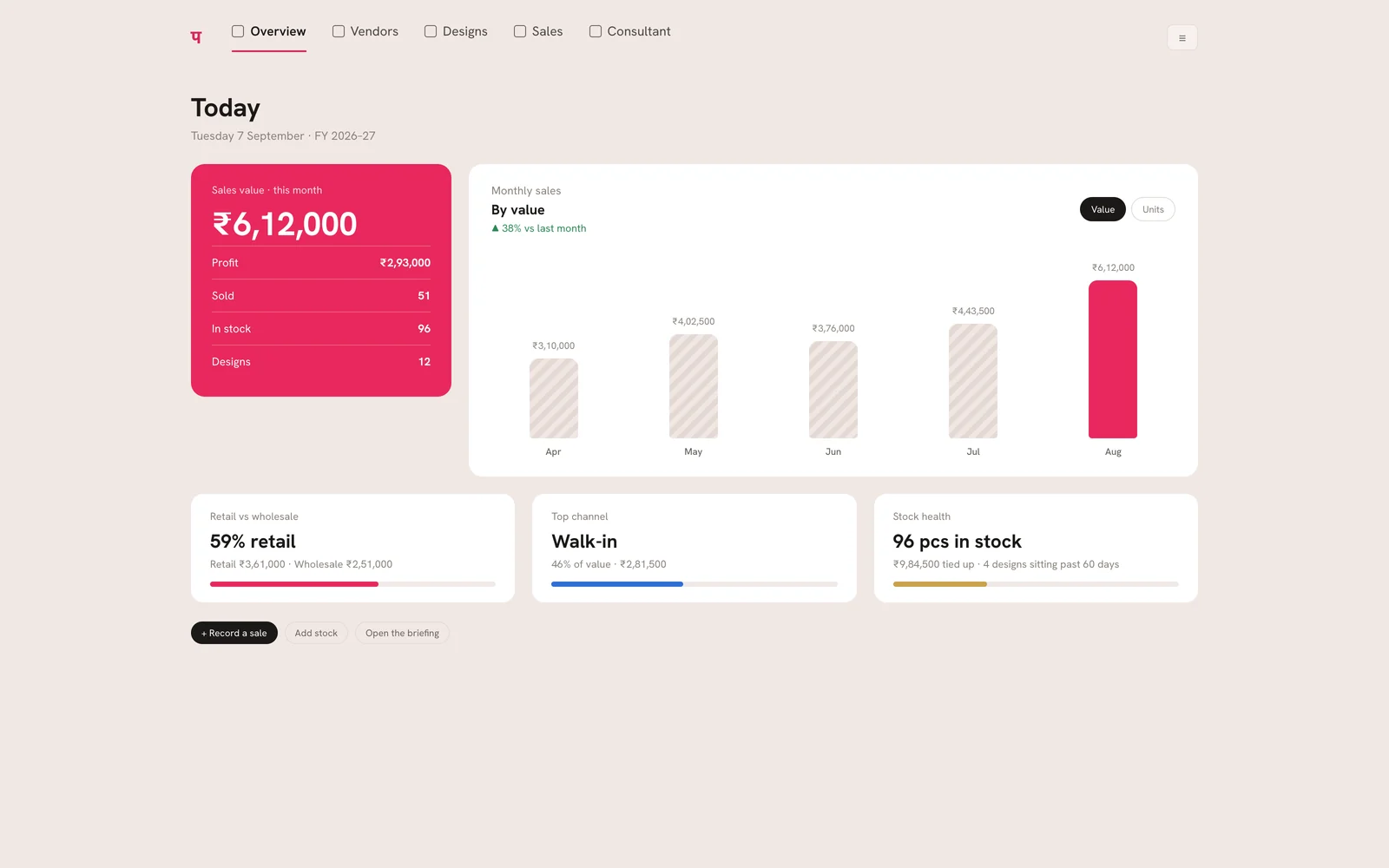
Parakh on the shop floor, over the shop's own wifi. Figures are representative, not the client's.
Running on the real shelf since July 2026. Parakh was shaped against JMS Studio's own stock, vendors and sales, on the owner's own Mac. It is still being sharpened where the numbers disagree with the room.
Forty years of taste built the racks. But taste cannot tell you which design is sitting still, or which vendor only looks profitable. Those answers were spread across spreadsheets, a billing system and memory — three places that never quite agreed.
A working slice of the app, right on this page. Pick a design off the shelf, read its verdict, sell one in a single line and watch the read move.
This is a demonstration built into the page with representative figures, not the client's. Every screen on this page is shown the same way — the layout is the real app, the names and numbers are not. The live app also carries vendors, purchases, returns, the financial year and the encrypted file underneath all of it.
See it on your own shelfFour jobs, one file, on the Mac in the back office and the phone on the shop floor. Nothing leaves the building.
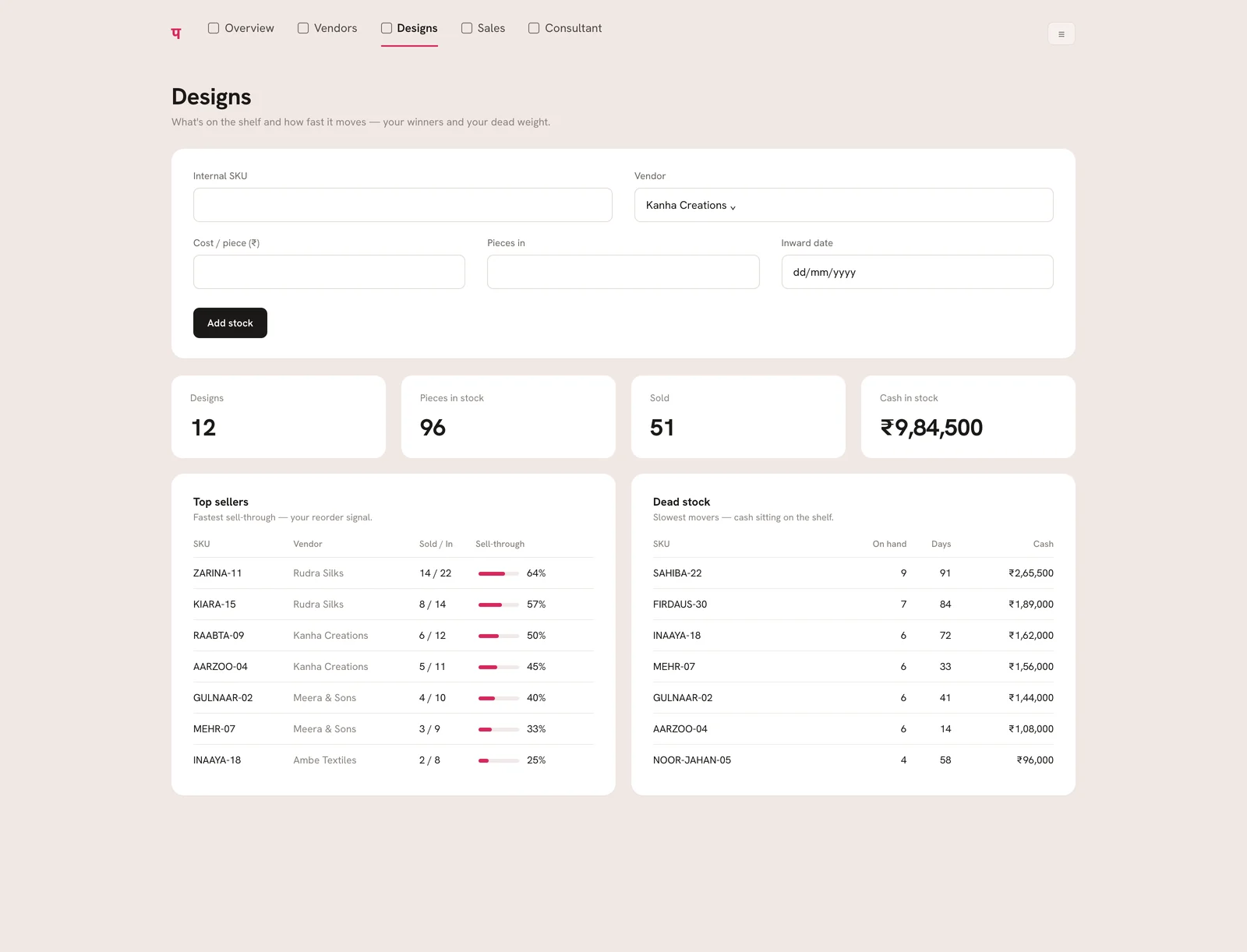
Each design carries what it cost, what it sold for, how many went out and how many are left. Sell-through, days on the shelf and cash tied up are read off it, not worked out later.
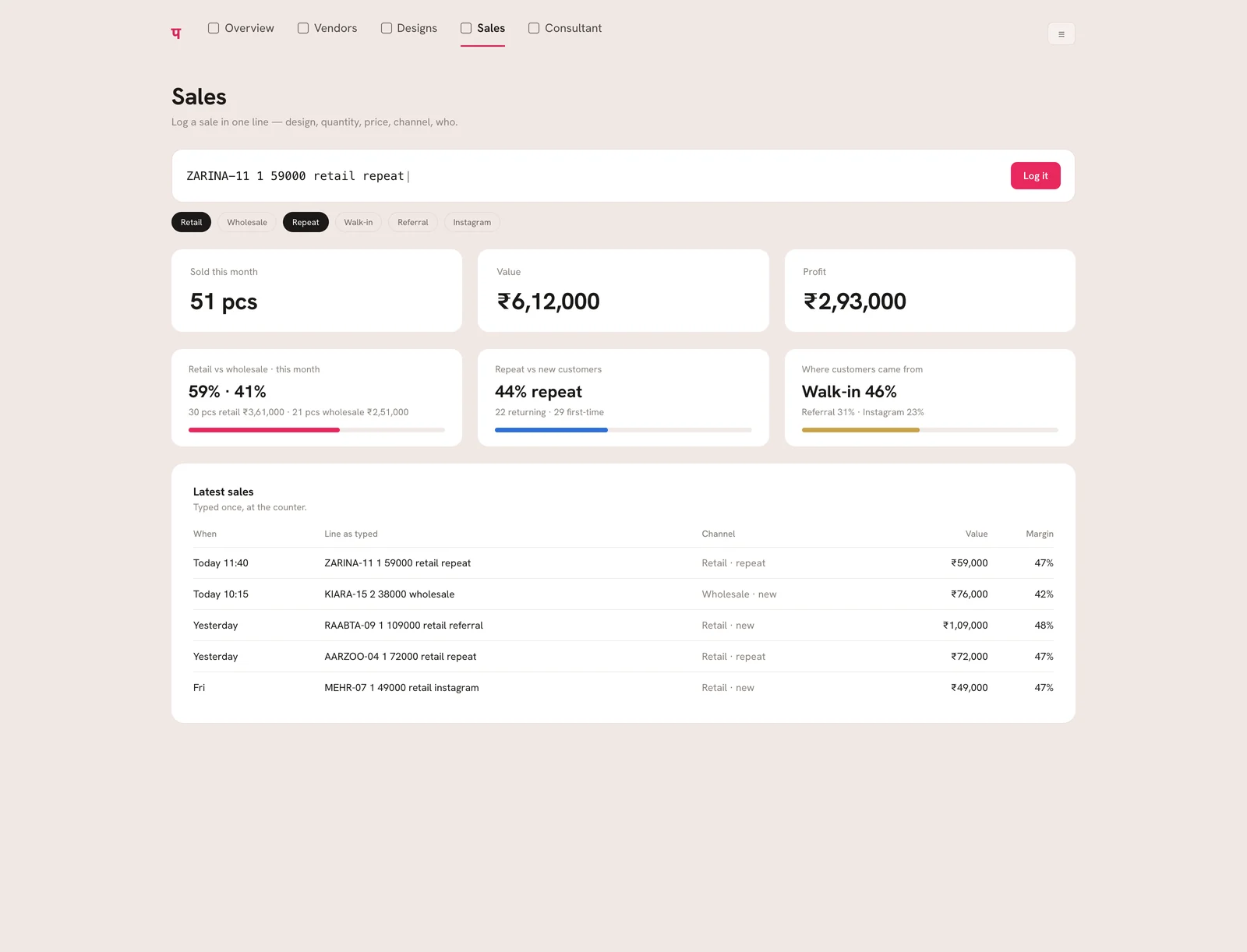
The whole sale is a single typed line — design, quantity, price, retail or wholesale, and where the customer came from. Repeat customers are logged as repeat, so the channel that first won them is never credited twice.
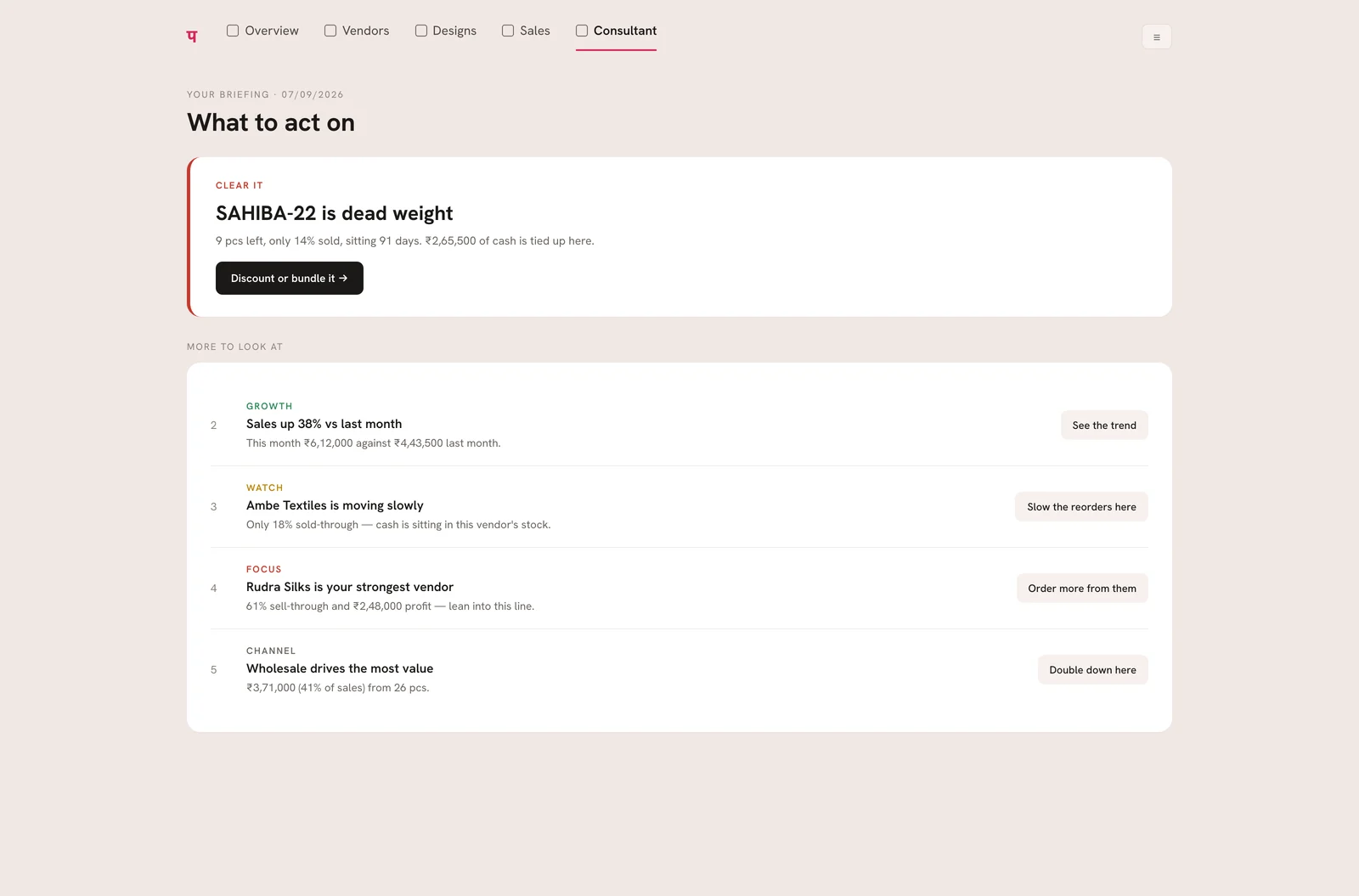
The briefing ranks what deserves attention this week in plain language — reorder this, clear that, this vendor is quietly carrying you. It runs on the owner's own machine; nothing is sent anywhere to produce it.
Sales value, profit, pieces sold and pieces in stock for the month, against the months before it. Retail against wholesale, the channel that is working, and how healthy the stock is — answered before the first customer walks in.
Parakh was shaped against real stock, real vendors and real arguments about what a number meant. Clubbed design codes, a financial year that starts in April, prices that already include tax, history that predates the software — every one of those came from the JMS Studio floor, not from a specification.
We build internal software inside businesses we already work with — deepest in Surat's textile and fashion trade. The brand gets you seen. This keeps you running.
Tell us roughly how many designs you carry and where the numbers live today. We will show you the app running, and what your own shelf would look like inside it.
Message Keshav on WhatsApp